Applied Instructional Design Case Study
This case study shows how a lesson was designed, evaluated, and refined using learner data and assessment evidence. It highlights four instructional design competencies: Problem Framing & Needs Analysis, Learner-Centered UX Design, Assessment & Evaluation Logic, and Data-Informed Iteration & Improvements.
Table of Contents
Problem Framing & Needs Analysis
Empathize / Define
Problem Framing
Empathy mapping informed how the
instructional problem was framed.
Instructional Problem:
Learners can perform main-idea and
supporting details identification with
guidance but struggle to do it independently.
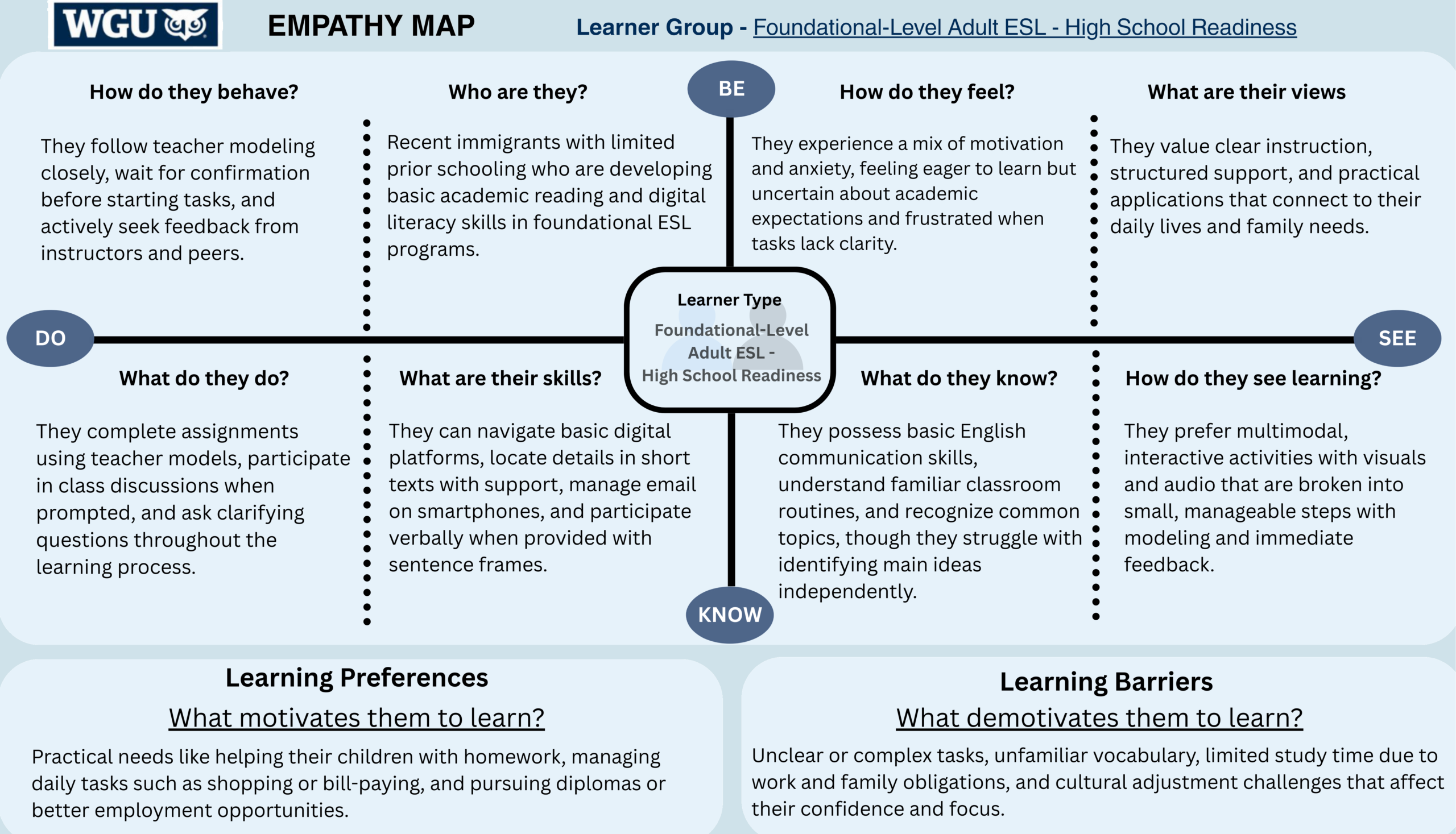
Empathy Map:
Empathy mapping captured learner
context, motivations, and barriers
that guided the module’s support decisions.
Needs Analysis
Needs Analysis linked classroom
evidence to the performance gap.
Audience
Foundational-level adult ESL learners working toward high-school readiness
Current Performance
Can perform with modeling and guidance
Desired Performance
Independently identify main ideas and
supporting details in informational text
Evidence Used
Classroom observation and recurring
learner performance patterns
Design Focus
Sequencing, Scaffolding, Accessibility Supports
Learner Centered UX Design
Ideate
Design decisions targeted the instructional problem by sequencing instruction,
scaffolding practice and feedback, and providing multimodal accessibility support.
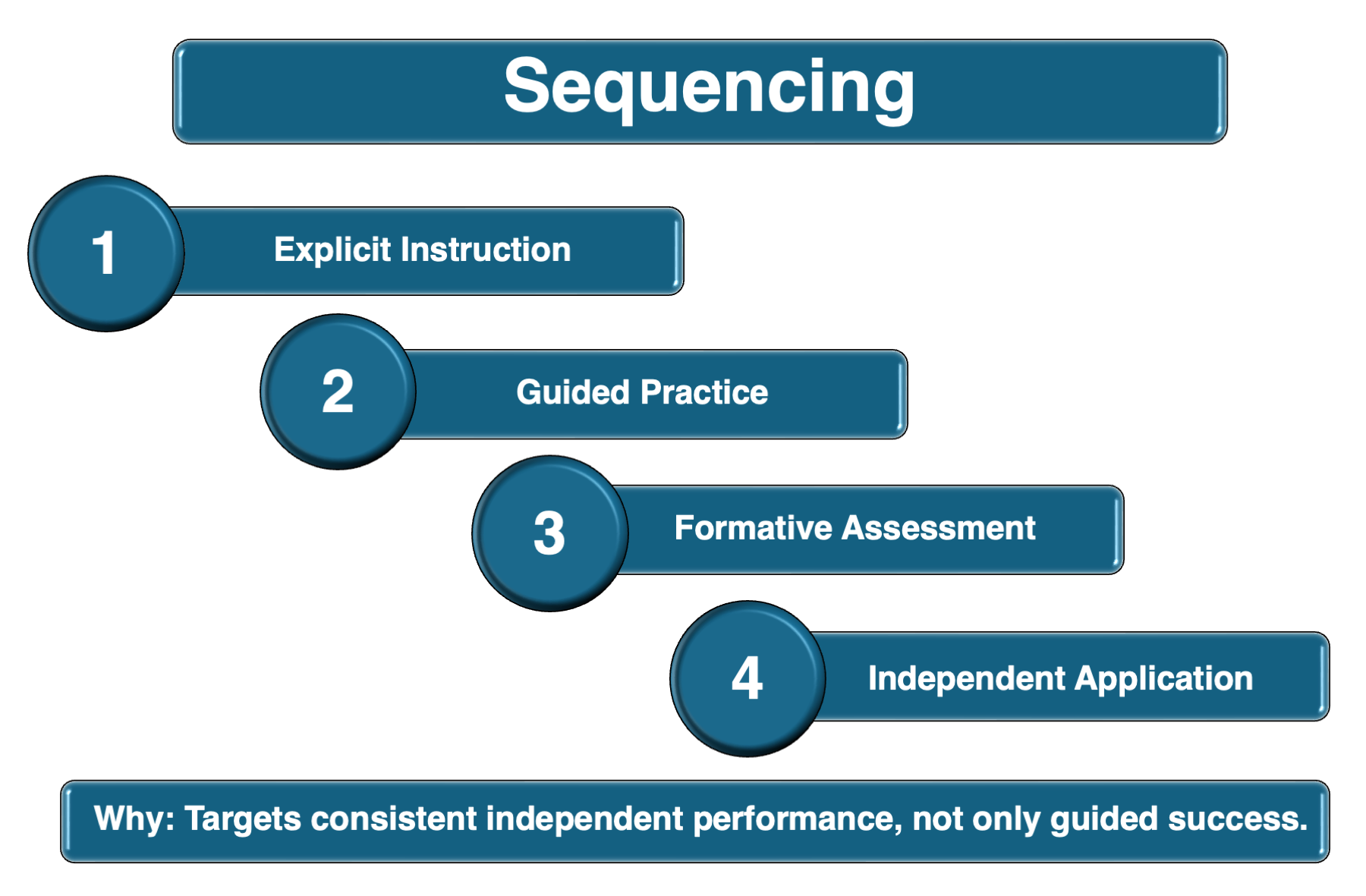
Sequencing
Video overview: sequencing, scaffolding, and accessibility supports
Evidence: Capstone Project, p. 24 - "Organizing
instructional content in a clear, linear sequence"
Summary
Instructional sequencing including explicit instruction,
guided practice, formative assessment and independent application
targets consistent independent performance, not only guided success.
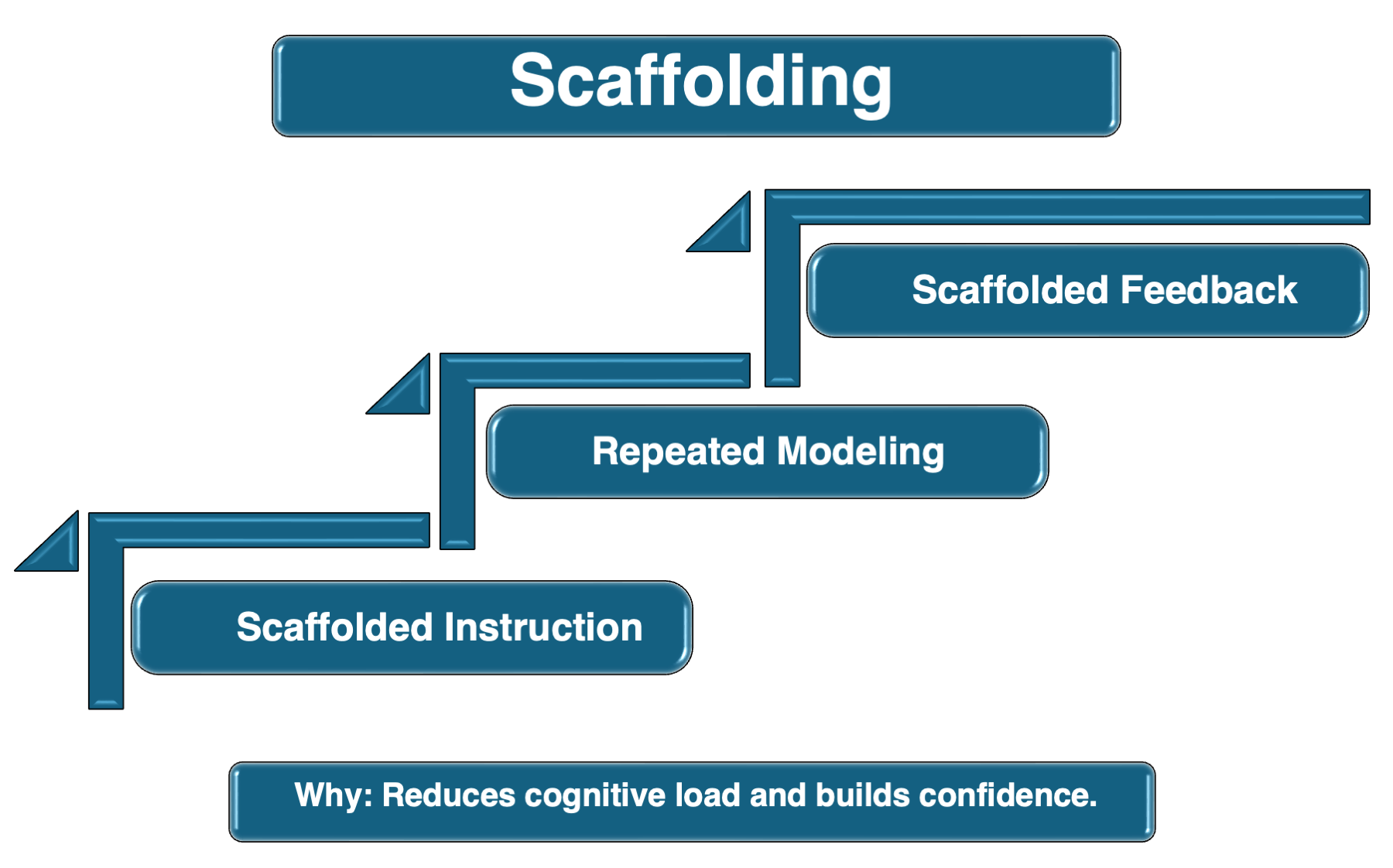
Scaffolding
Video overview: scaffolding supports (instruction, modeling, feedback)
Evidence: Capstone Project, p. 24 - "short
scaffolded steps with repeated modeling"
Summary
Scaffolded instruction, repeated modeling during practice,
and scaffolded feedback explaining errors
and correct reasoning reduces cognitive load and builds confidence.
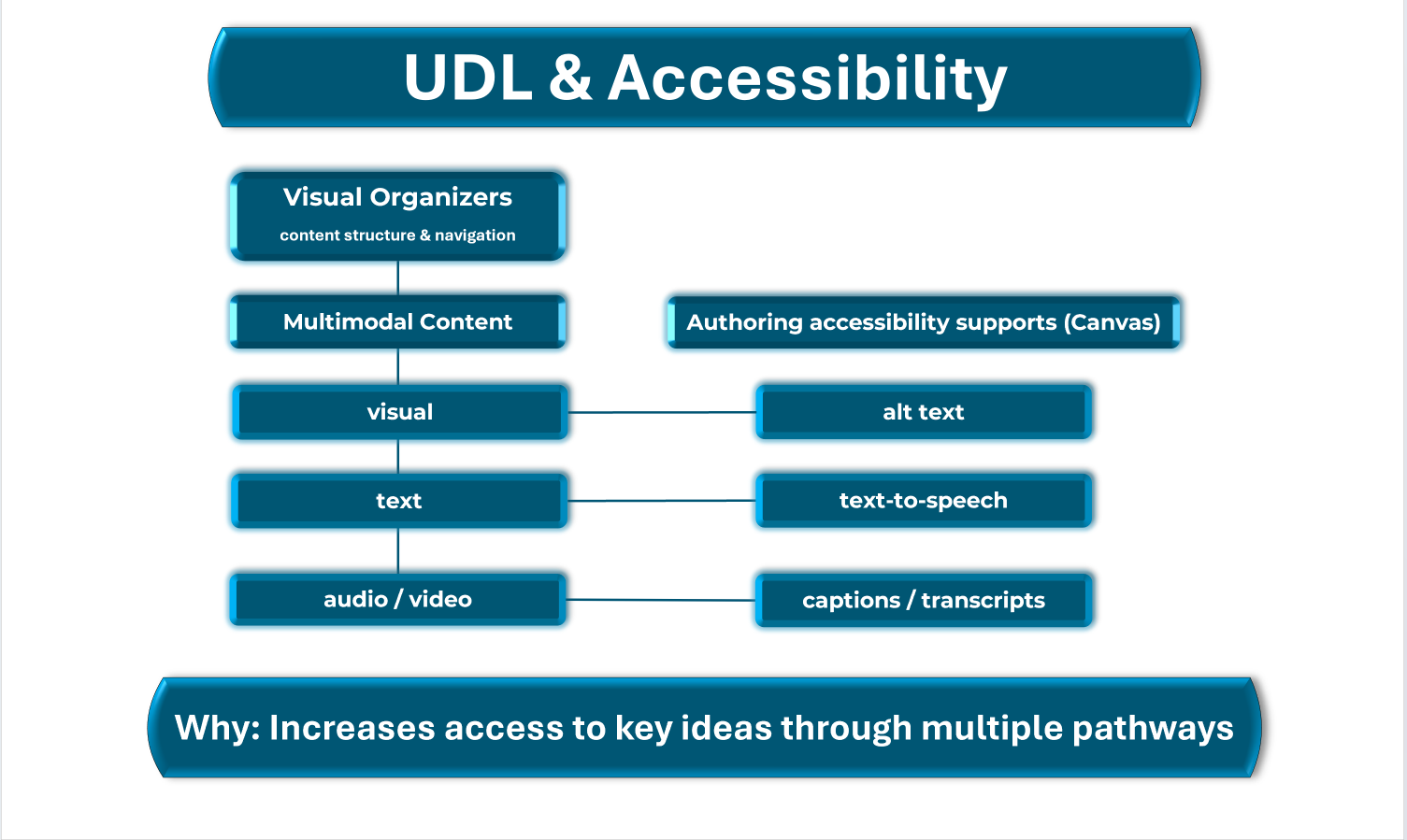
Learner-Centered UX Implementation
Video overview: accessibility supports (visual organizers plus audio and text options)
Evidence: Capstone Project, p. 24 - "combine
visuals, audio, and text”
Summary
UDL was implemented using built-in
Canvas supports through alt text for
visuals, text-to-speech for text, and
captions and transcripts as text alternatives
for audio and video, increasing access to
key ideas through multiple pathways.
Tools & Methods
Primary Skills
Empathy Mapping
Persona Development
Gap Analysis
Needs Analysis
Learning Objectives
Alignment
Methodology
Observation
Classroom Observation
Learner Analysis
Pre-Post Assessment
Formative Assessment
Summative Assessment
Design Approaches
Problem Statement
Structured Practice
Scaffolding
Modeling
Accessibility / Multimodal Supports
Assessment & Evaluation Logic - Prototype / Test
Learning objectives and instruction were intentionally aligned with pre- and post- assessments to evaluate learners’ ability to independently identify main ideas and supporting details.
Evidence: Canvas module “Learning Objectives”
page (screenshot).
Performance Results
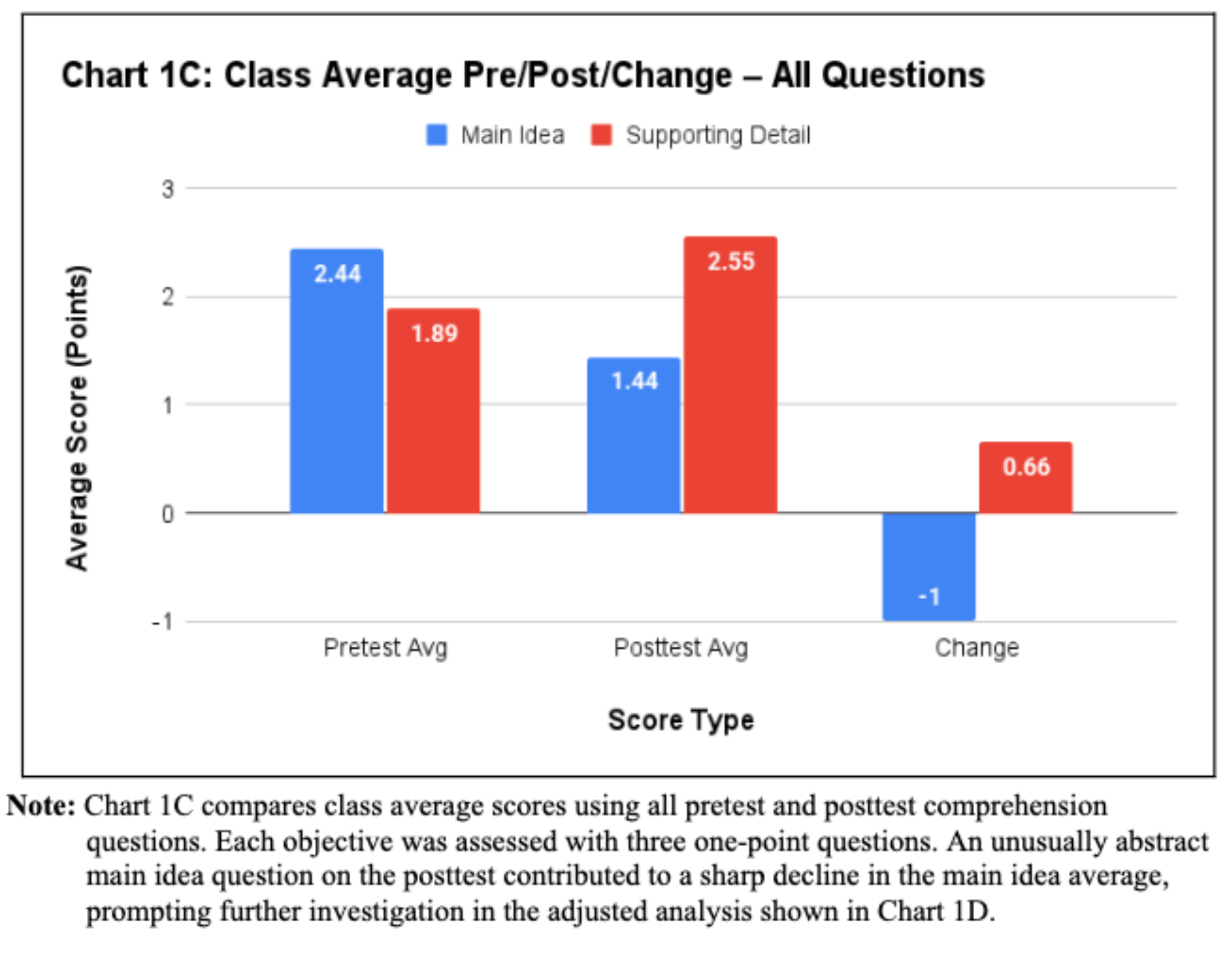
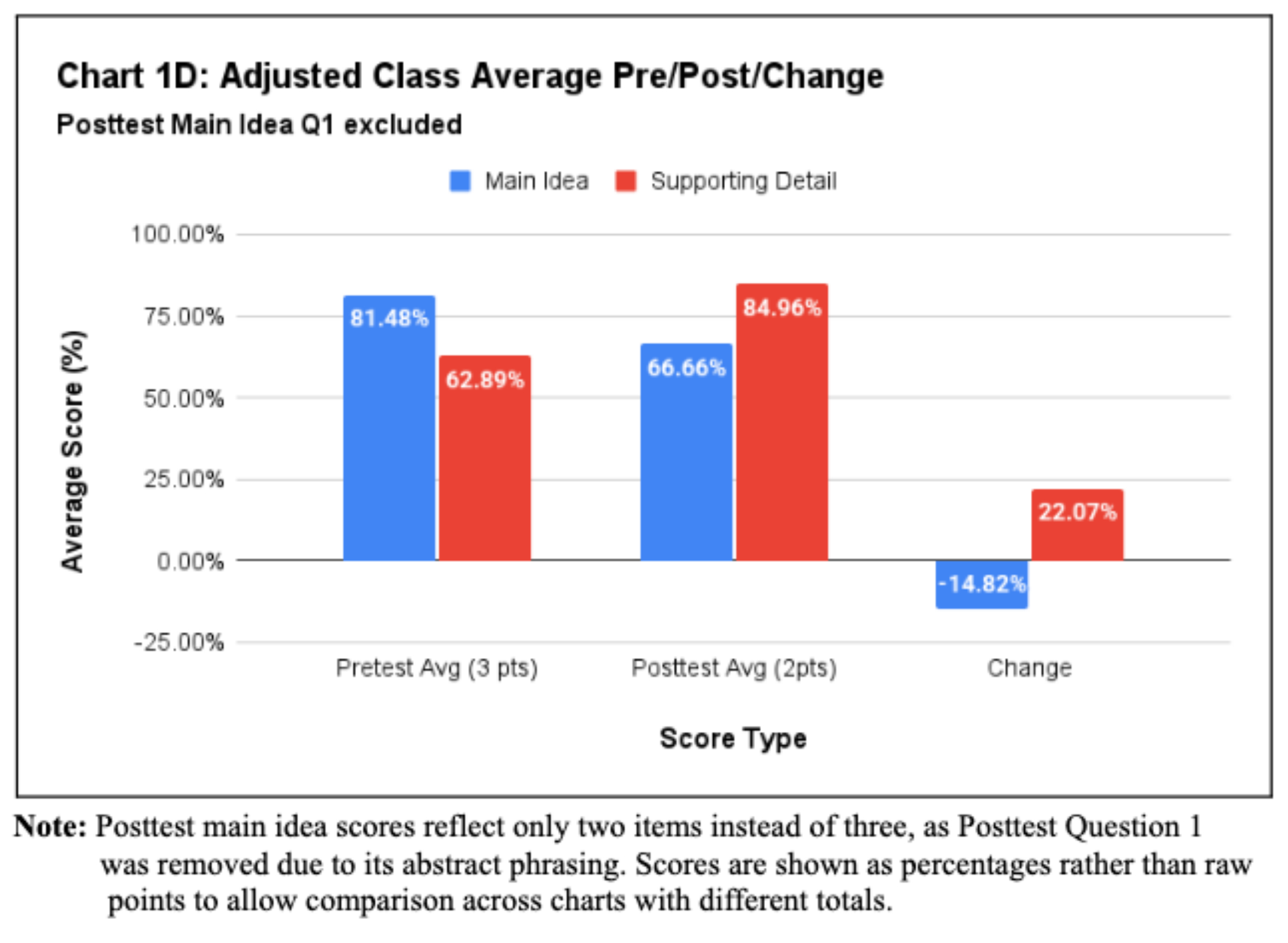
Assessment results were analyzed and adjusted to ensure
valid interpretation of learning outcomes.
Unadjusted Class Averages
Evidence: Capstone Project, p. 42
Adjusted Class Averages
(Posttest Q1 removed for clarity)
Evidence: Capstone Project, p. 43
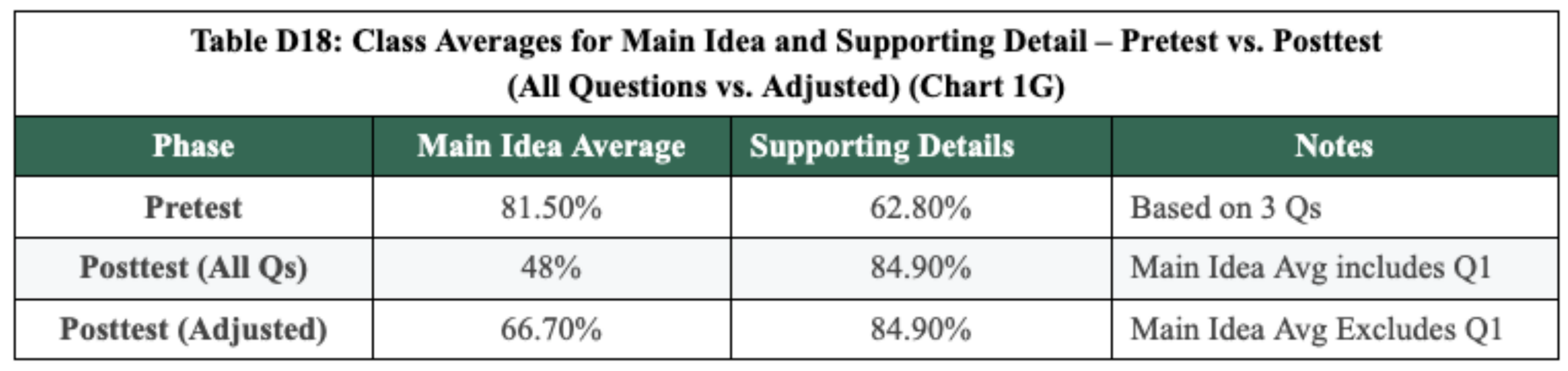
Summary table of pre, post,
and adjusted class averages.
Evidence: Capstone Project, p. 94
Learner Experience Feedback
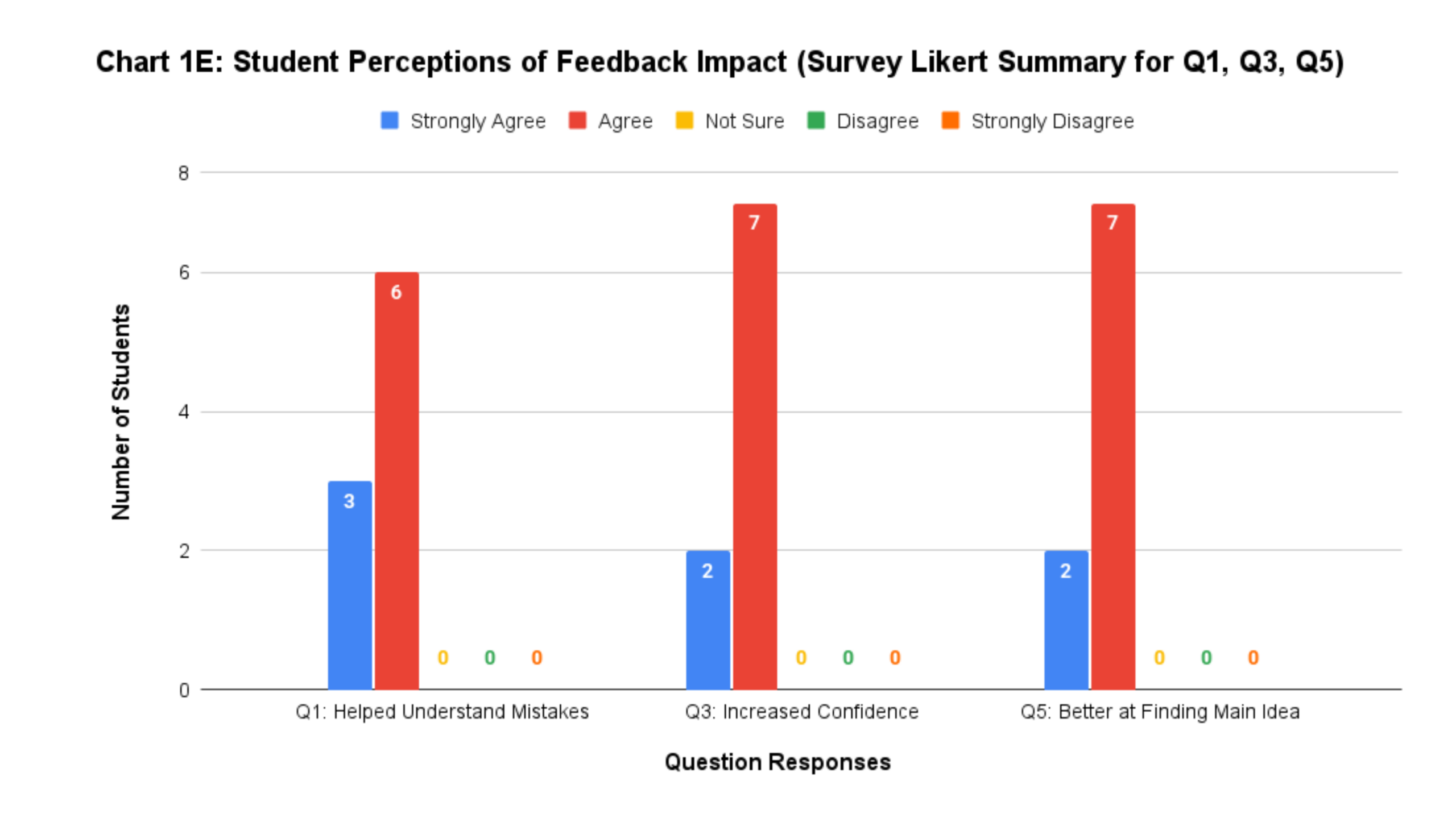
Learner perception data and coded reflections provided insight into how instructional supports influenced learning strategies, informing data-informed improvements.
Learner perception survey summary (Likert).
Evidence: Capstone Project, p. 44
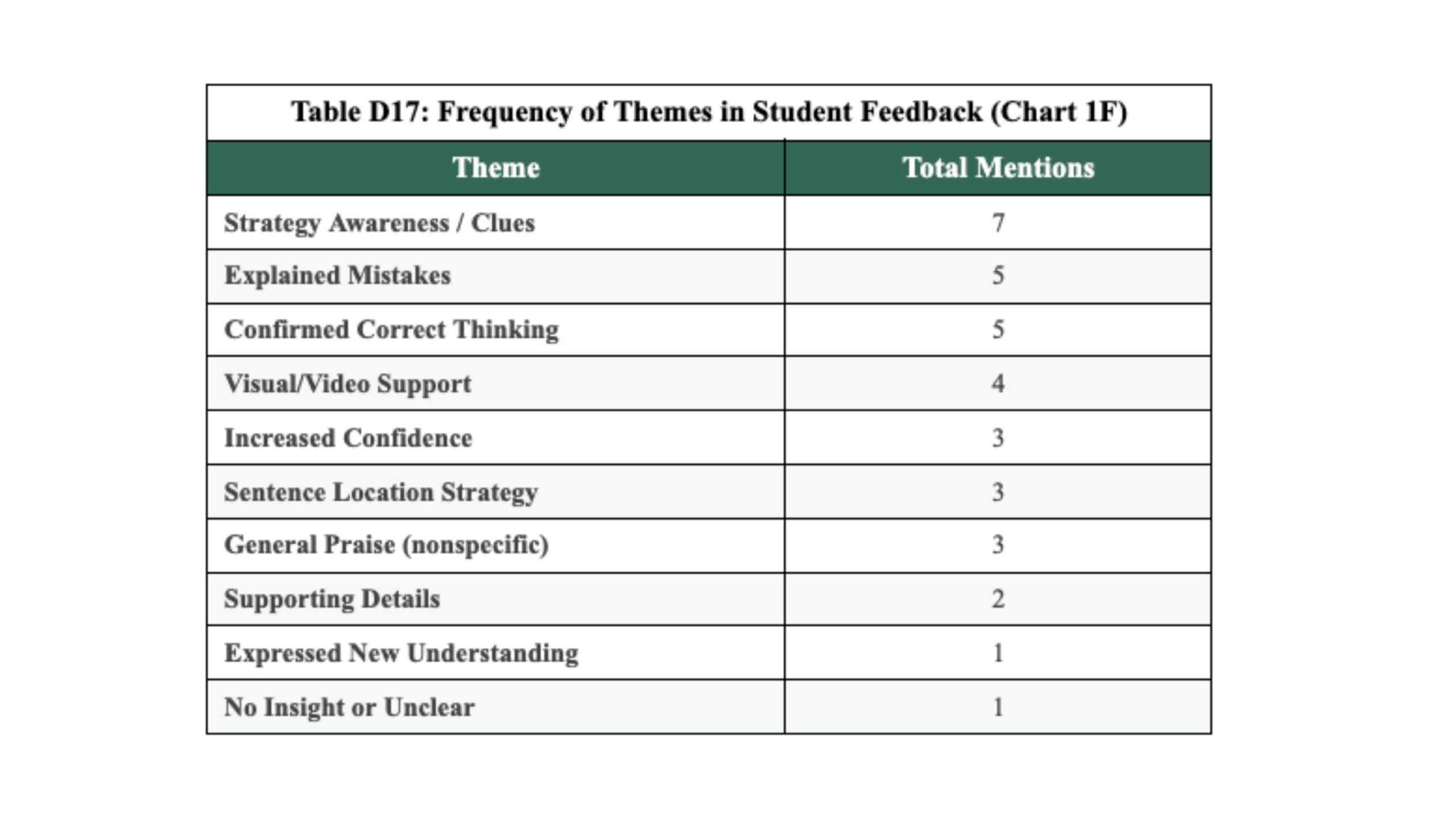
Coded reflection themes, frequency counts.
Evidence: Capstone Project, p. 94
Data-Informed Iteration &
Improvements - Iterate
Performance results and learner experience feedback informed assessment and instructional improvements
to strengthen the validity of learning outcome measures and the clarity of learner comprehension supports.
Performance Results →
Assessment validity
Posttest results led to revisions of main-idea assessment items to improve the validity of learning
outcome data by minimizing the influence of ambiguous question wording.
Evidence - Capstone - Proposed Iteration(s) of
E-Learning Solution section: p. 48-49
Learner Experience Feedback → Instructional support
Learner experience feedback guided changes to scaffolded feedback explanations and module
orientation to improve learner understanding of strategies assessed during independent practice.