Applied Instructional Design Case Study
Master’s Capstone: Designing, Evaluating, and Iterating a Reading Comprehension E-learning Module for Adult ESL Learners
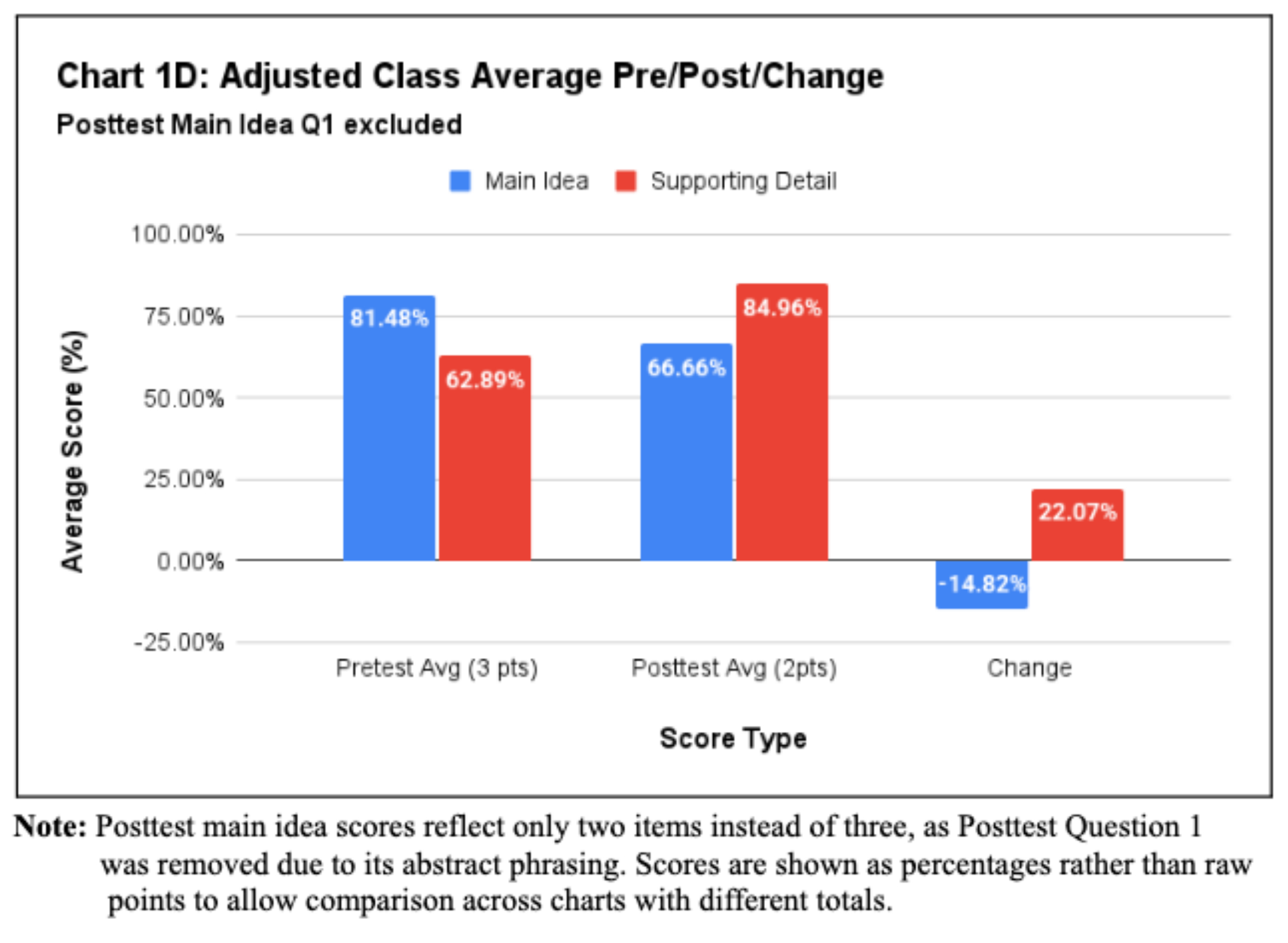
Supporting detail scores were up 22% from pretest to posttest. Three data-driven iterations were identified from assessment and feedback analysis.
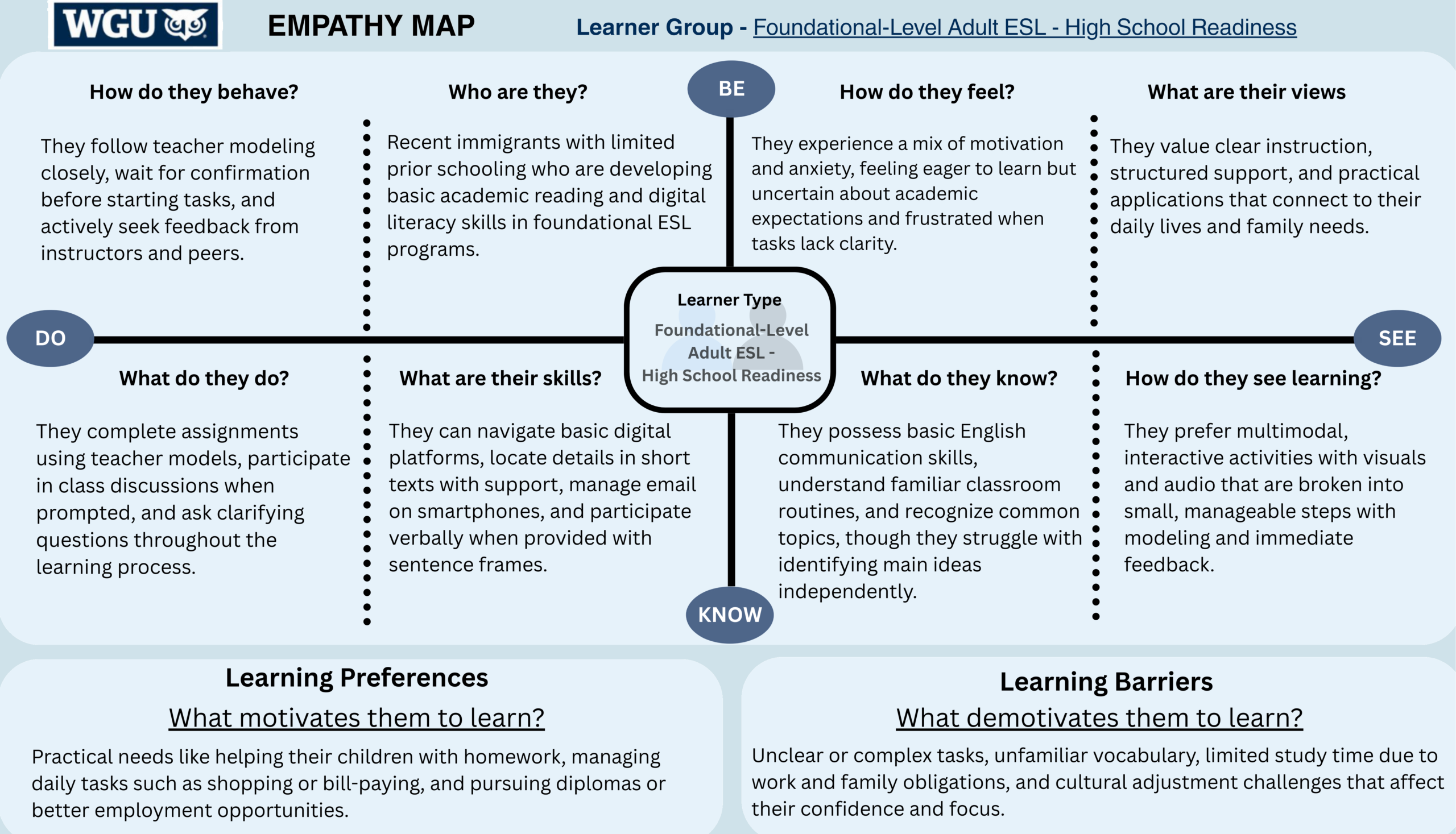
For my Master’s capstone, I designed a reading comprehension module for foundational-level adult ESL learners who could identify main ideas with guidance but struggled to do so independently. Using empathy mapping, scaffolded instruction, and pre/post assessment data, I built, tested, and refined the module improving adjusted class averages from the mid-60s to the mid-80s in supporting detail identification.
Audience
Adult ESL Learners
Outcome
Measurable Improvement
Methods
Empathy Mapping
Gap Analysis
Scaffolding
Focus
Reading Comprehension
The Challenge
Foundational-level adult ESL learners in a high school readiness program could perform main-idea and supporting details identification with teacher modeling and guidance, but struggled to do it independently. I needed to understand who these learners were, what motivated them, and what barriers they faced before designing instruction.
Empathy map capturing learner behaviors, feelings, motivations, and barriers
Needs Analysis
Current Performance
Can identify main ideas and supporting details with modeling and guidance
Desired Performance
Independently identify main ideas and supporting details in informational text
Evidence Used
Classroom observation and recurring learner performance patterns
Design Focus
Sequencing, scaffolding, and accessibility supports to bridge the gap
My Approach
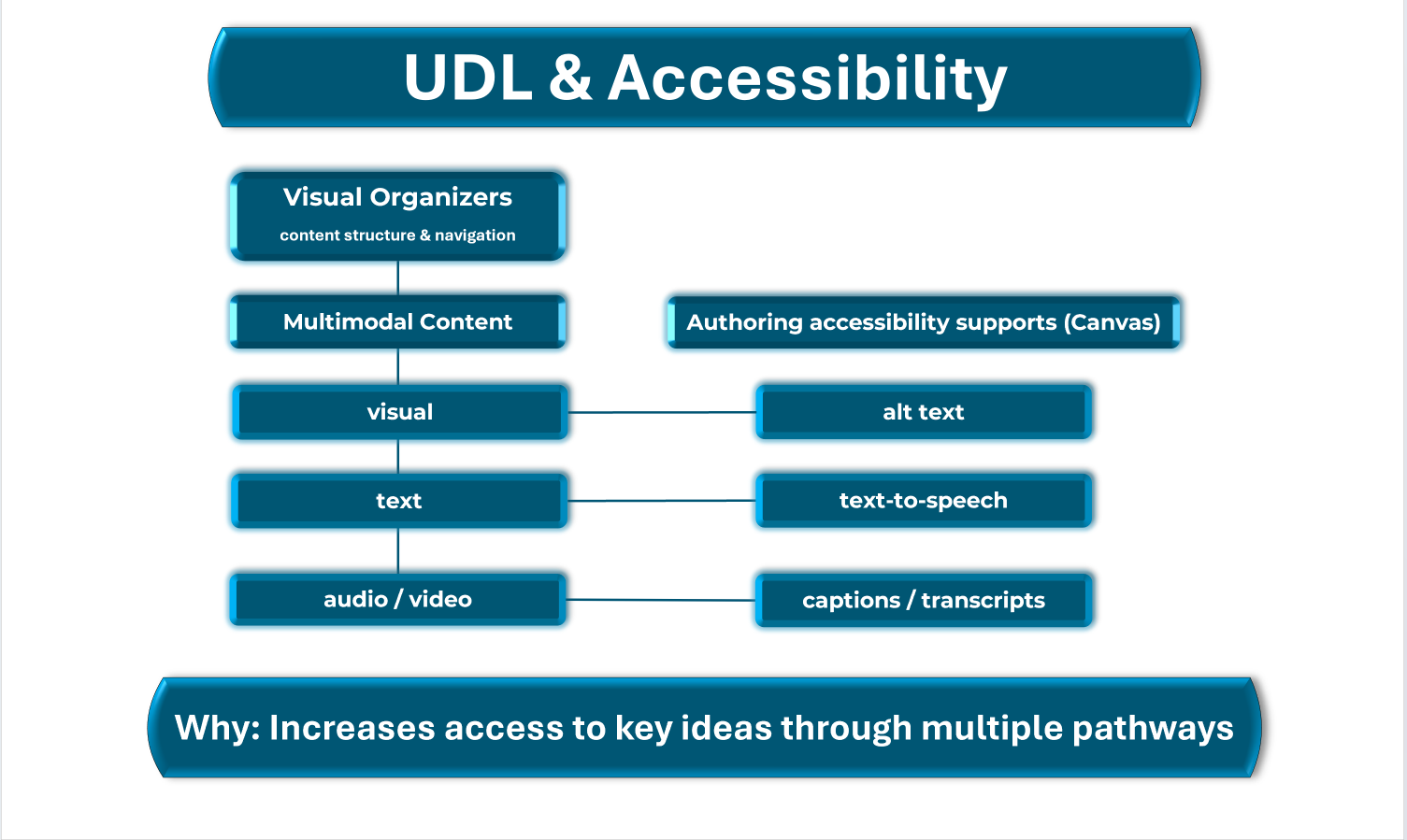
I targeted the performance gap with three interconnected design strategies: structured sequencing to build skills incrementally, scaffolding to reduce cognitive load, and multimodal accessibility supports to reach learners through multiple pathways.
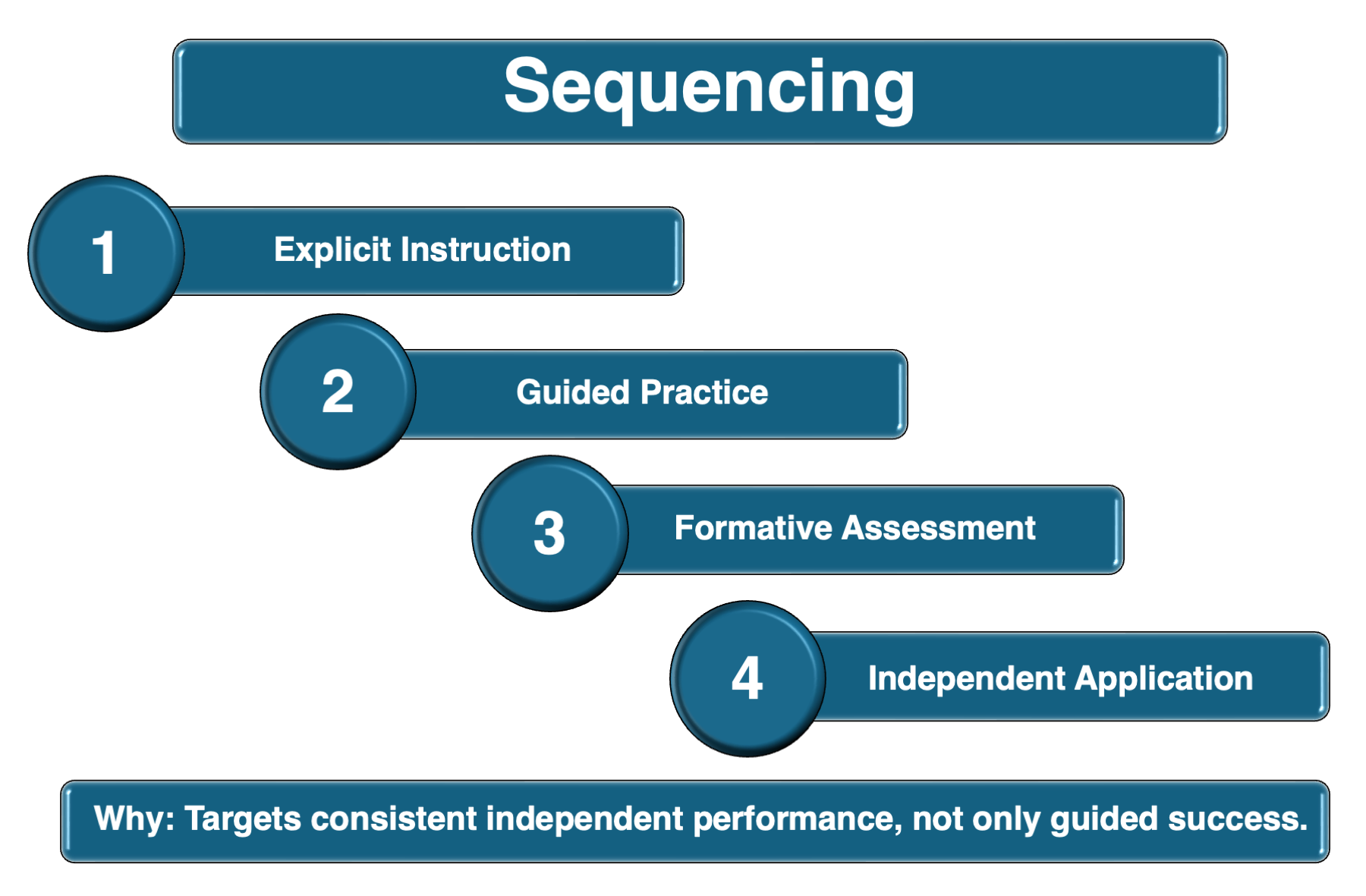
Four-phase progression from explicit instruction through guided practice, formative assessment, to independent application.
Targets independent performance, not just guided success
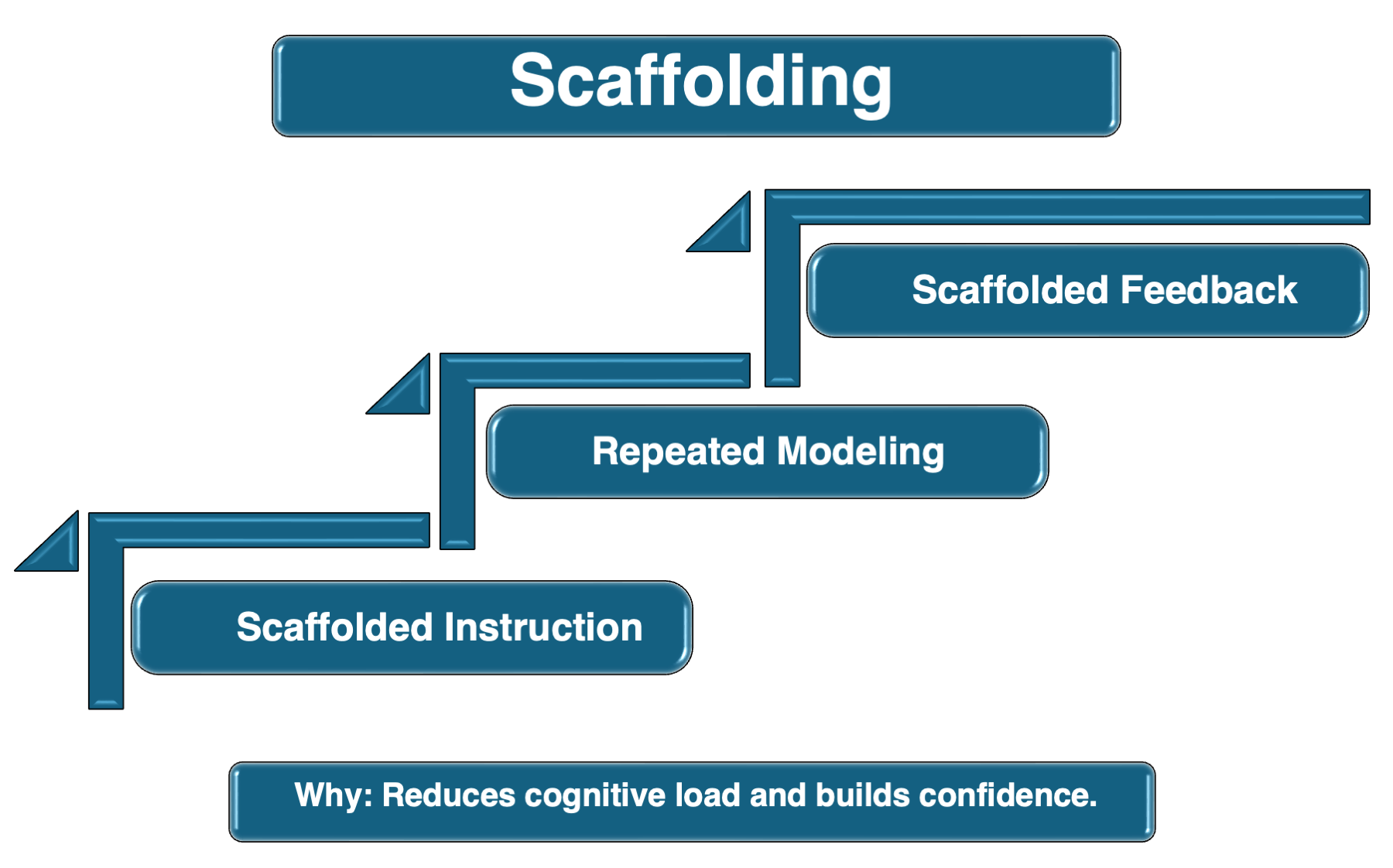
Scaffolded instruction, repeated modeling during practice, and graduated feedback that enables self-correction.
Results & Evidence
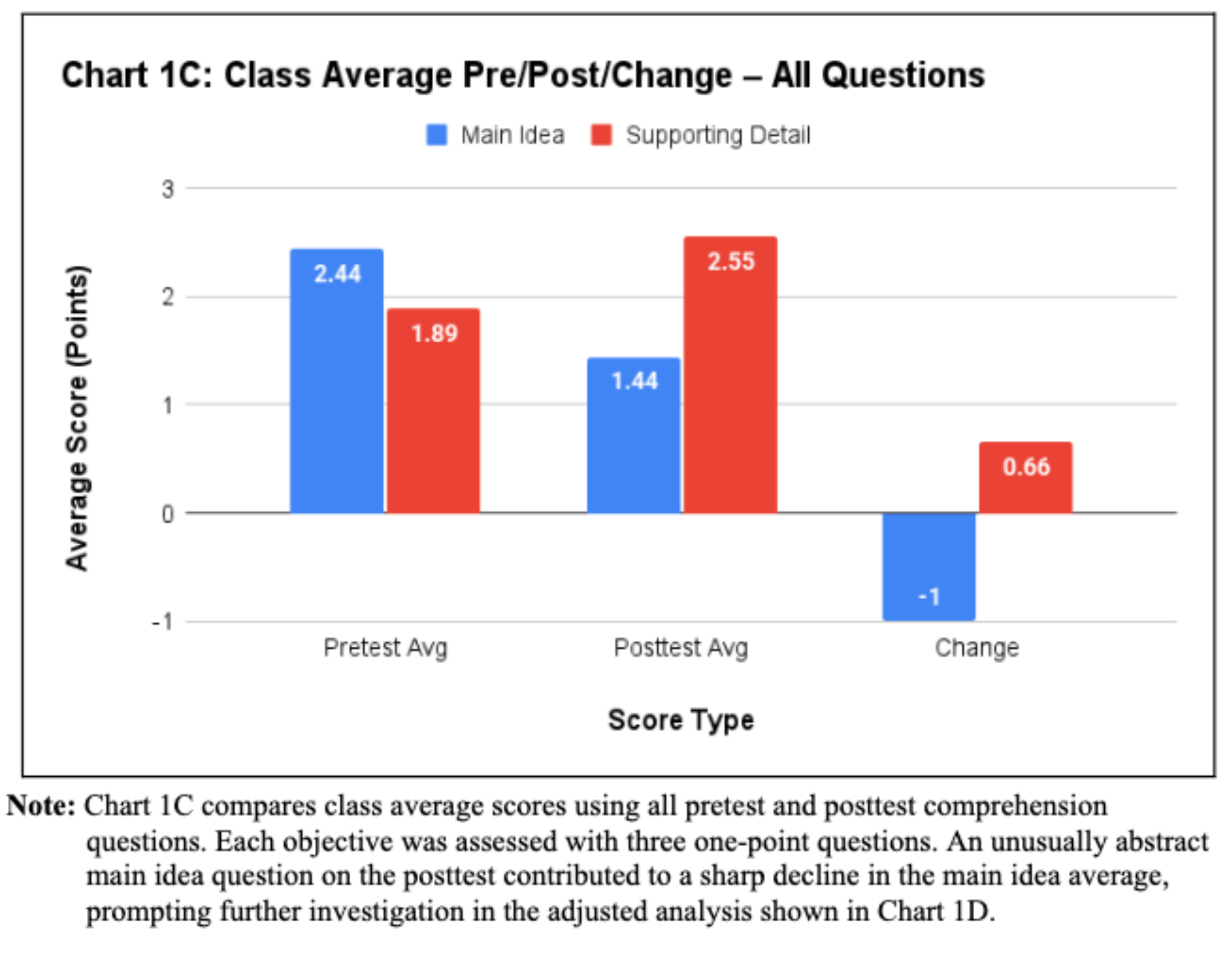
I aligned learning objectives with pre- and post-assessments to measure whether learners could independently identify main ideas and supporting details. Here’s what the data showed.
+22%
Supporting Details scores up 22% from pre to posttest
3
Data-driven iterations identified from assessment and feedback analysis
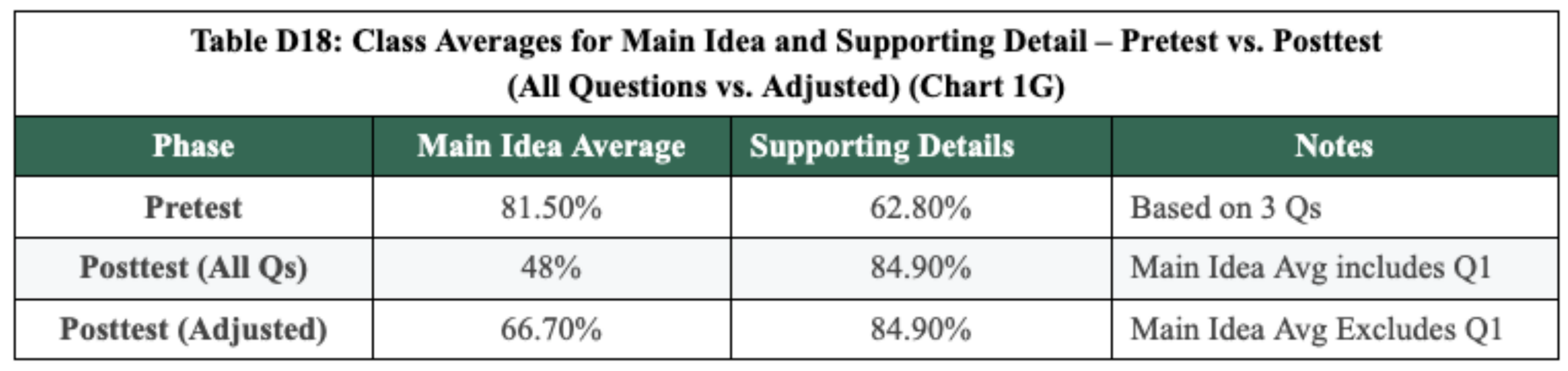
Summary table of pre, post, and adjusted class averages
Learner Experience Feedback
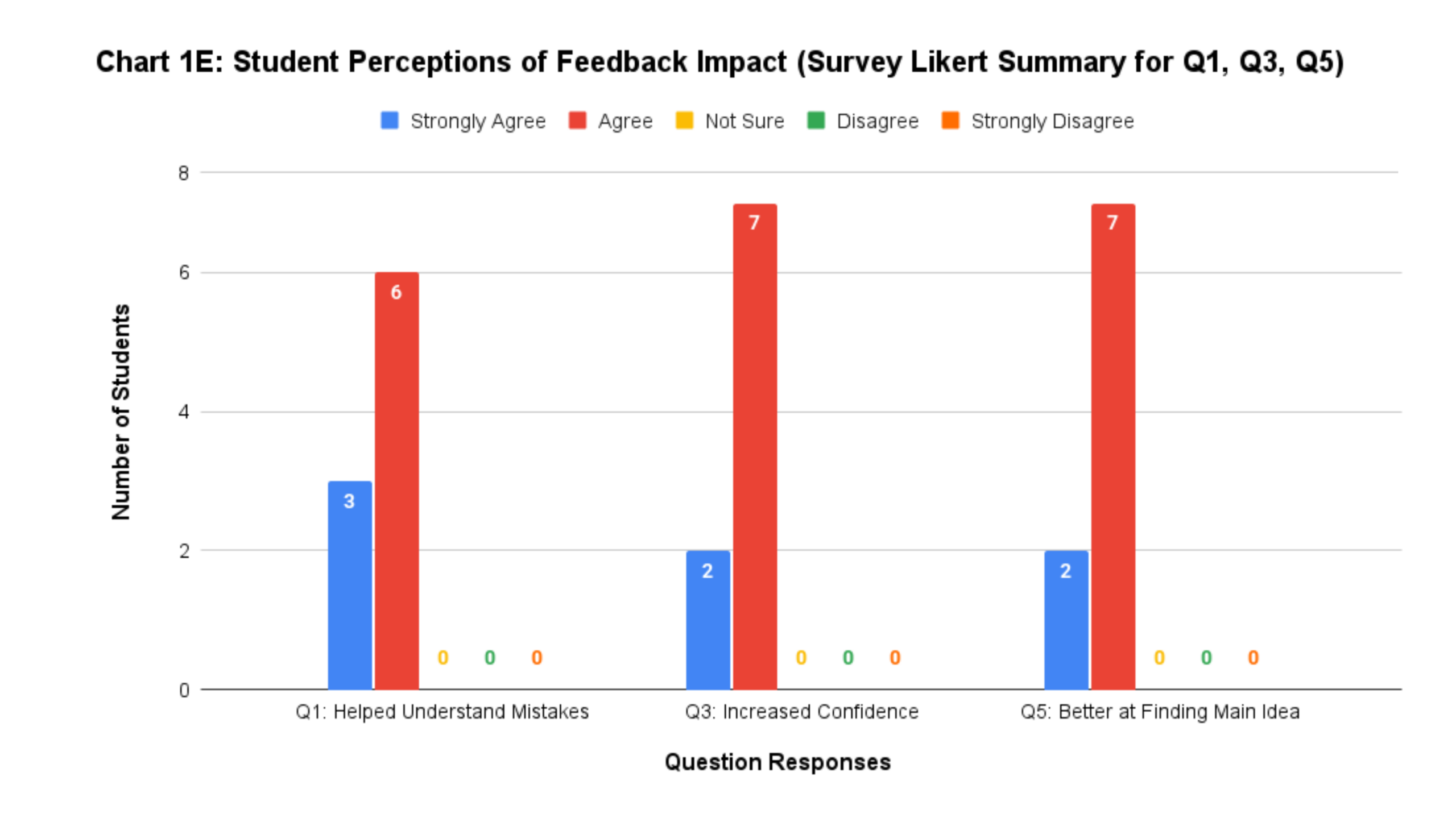
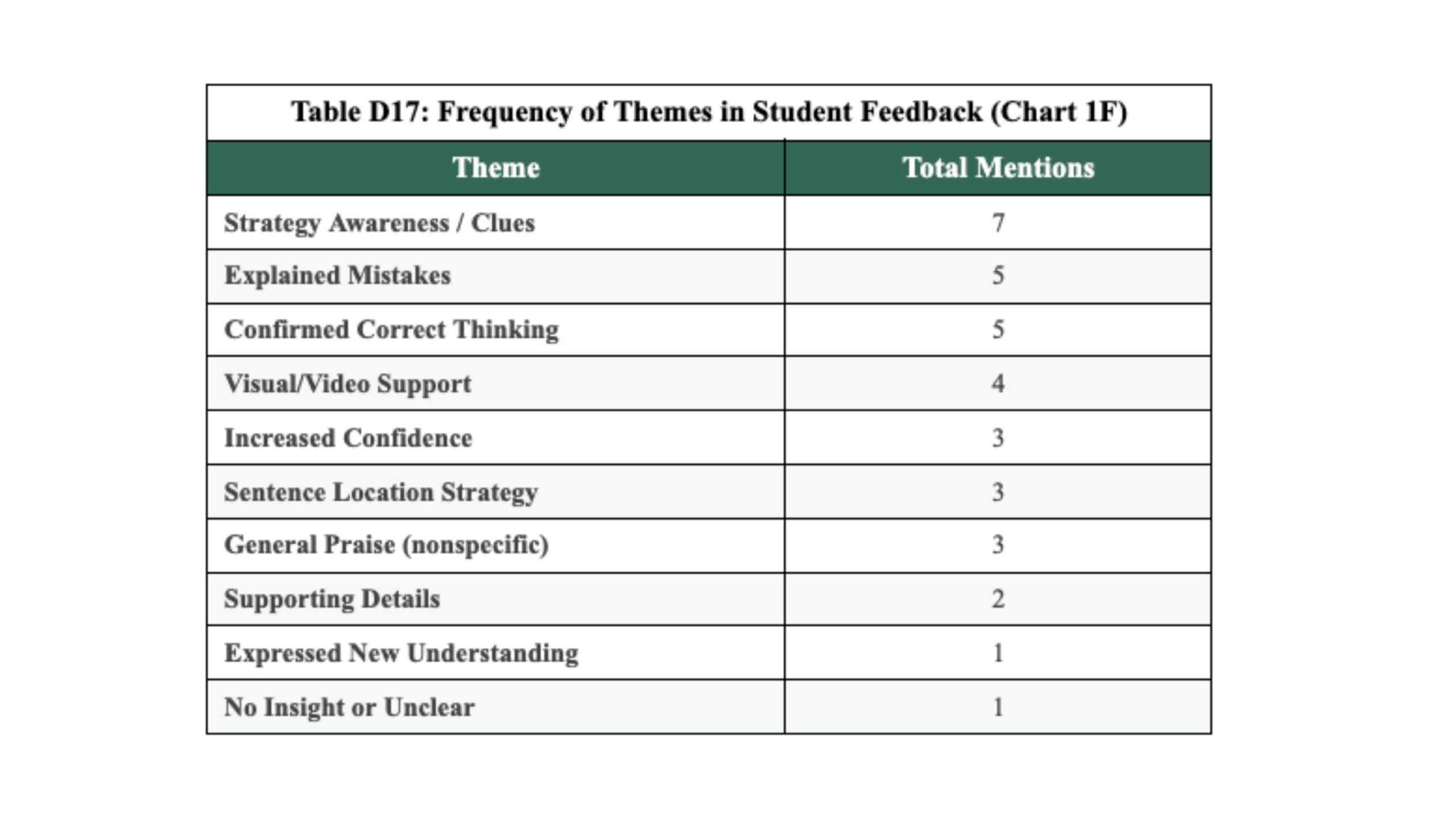
Learner perception data and coded reflections provided insight into how instructional supports influenced learning strategies.
Iteration & Reflection
The data pointed to specific improvements I’d make in a next iteration. Performance results and learner feedback together shaped these recommendations.
Assessment validity
Posttest results revealed that one question’s wording introduced ambiguity. I’d revise assessment items to align more closely with instructional language and reduce distractor confusion.
Instructional support clarity
Learner reflections showed the scaffolded feedback was valued but could be expanded. I’d add a brief module orientation and clearer explanations for both correct and incorrect responses.
Instruction-assessment alignment
Main idea instruction needs tighter alignment with assessment format and instructional examples should match posttest item structure and complexity.
Overview Video
A walkthrough of the entire project from problem framing through design decisions, implementation, and results.